Interested in conducting research but don't know where to start? You don't necessarily need a university lab, a research internship, or a professor to begin. Here's how to turn your curiosity into your first literature review.
You've probably come across students who have conducted university-level research, published papers, or presented at academic conferences. And if you're still in high school, getting started can seem intimidating. Where do you even find research papers? How do you know which sources to trust? And how are you supposed to write an entire research paper?
Here's something you might not know: you can begin exploring academic research independently, without conducting your own laboratory experiments.
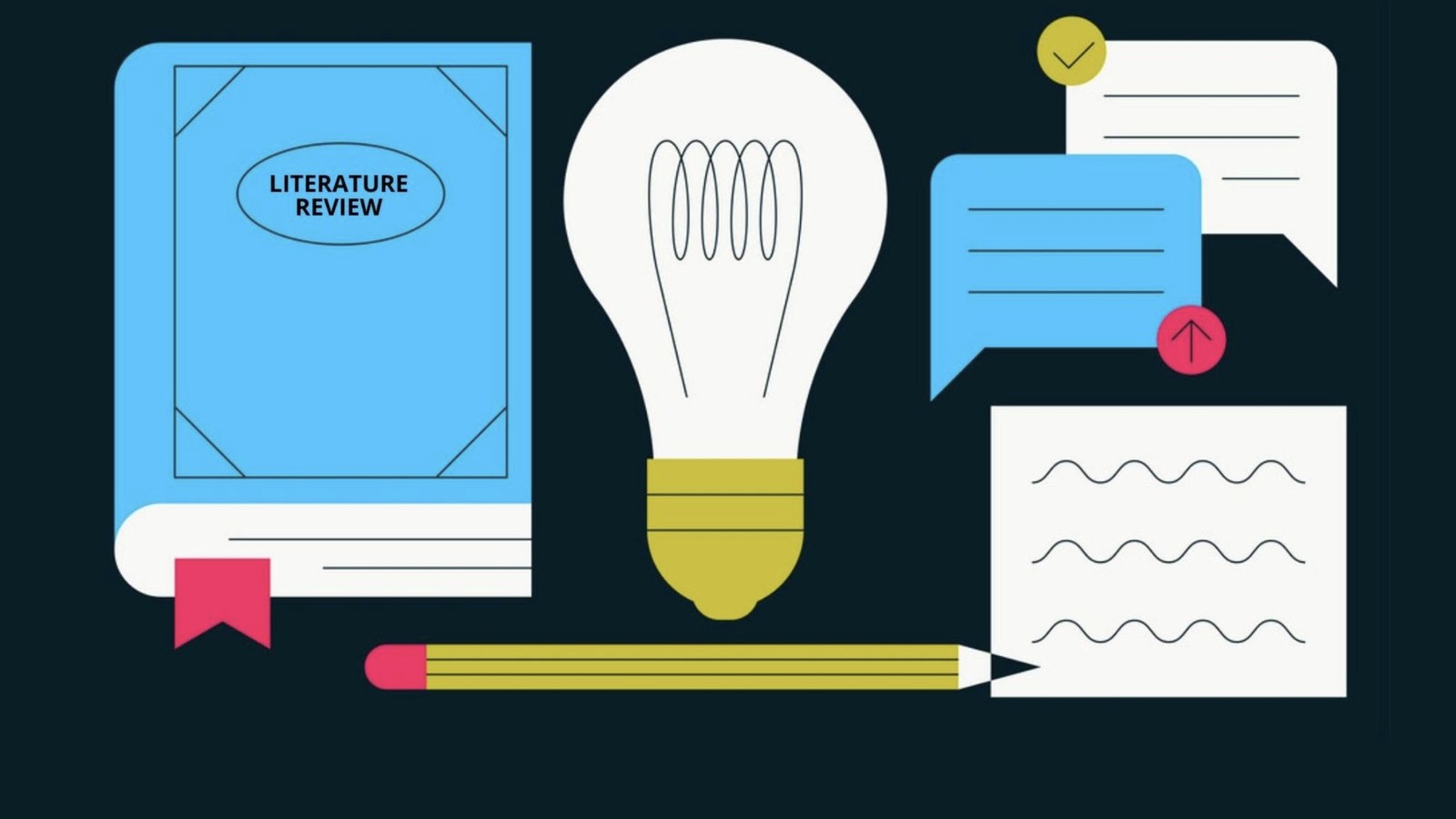
One way to get started is through a literature review. Rather than collecting your own experimental data, you'll investigate existing research, connect findings from different studies, and develop a deeper understanding of a particular topic.
Whether you're exploring a potential university major, developing a passion project, or simply curious about a scientific question, this guide will walk you through the process.
01. First, What Is a Literature Review?
A literature review is an analysis of existing research surrounding a particular topic or research question.
Instead of conducting your own experiments, you examine studies that other researchers have already published. You identify common findings, compare different perspectives, evaluate limitations, and draw conclusions about what the existing research tells us.
Think of yourself as a detective. Each research paper provides another piece of evidence, and your job is to connect those pieces to understand the bigger picture.
For example:
Imagine you're interested in whether artificial intelligence can improve the early detection of diseases.
You might investigate:
- How are AI models currently being used in medical imaging?
- How accurate are these models compared to traditional diagnostic methods?
- What limitations prevent AI from being implemented in clinical settings?
By examining existing studies, you can investigate these questions without needing access to a hospital or medical laboratory.
Why start with a literature review?
- Develop your academic writing and critical thinking skills.
- Learn how to navigate scientific publications and evaluate evidence.
- Explore potential university majors and areas of specialization.
- Identify unanswered questions that could inspire future research projects.
02. How to Find a Research Question
Every research project begins with a question. But before you start searching for academic papers, you need to figure out what you actually want to investigate.
Start with something you're genuinely curious about.
Your first idea doesn't need to be groundbreaking. Think about something you've encountered in class, read about online, or wondered about in everyday life.
Here are a few examples:
- Can flowers detect vibrations produced by bees?
- Why do astronauts experience vision changes in space?
- Can gut microbes influence human behaviour?
- How can machine learning help predict natural disasters?
- Can certain microorganisms break down plastic?
Once you've identified a general topic, narrow it down.
For example:
| Research scope | Example |
|---|---|
| Too broad | Artificial intelligence in healthcare |
| More focused | AI applications in medical imaging |
| Specific research question | How accurately can machine learning models identify early-stage lung cancer from CT scans? |
A focused research question gives your literature review direction. It also helps you avoid collecting dozens of papers that aren't actually relevant to your topic.
A tip: Choose a question that has enough existing research available to investigate. A question that's too broad can become overwhelming, while one that's overly specific might not have enough published literature.
03. Where to Find Academic Research Papers
Now that you have a research question, it's time to find your sources.
Rather than relying exclusively on regular Google searches, use academic search engines and scholarly databases to locate research papers.
Here are some useful starting points:
Google Scholar
A broad academic search engine that helps you discover journal articles, theses, conference papers, and other scholarly publications.
Website: https://scholar.google.com/
PubMed
A database particularly useful for biomedical research, medicine, and life sciences.
Website: https://pubmed.ncbi.nlm.nih.gov/
Directory of Open Access Journals (DOAJ)
Helps you discover peer-reviewed open-access journals across different academic disciplines.
Website: https://doaj.org/
Semantic Scholar
An academic search engine that helps you discover relevant papers and explore connections between research publications.
Website: https://www.semanticscholar.org/
CORE
A search platform that aggregates open-access research papers from repositories and journals.
Website: https://core.ac.uk/
How to Search More Effectively
Finding relevant research isn't always as simple as typing your entire research question into a search engine.
Try these strategies:
- Experiment with keywords: Use synonyms and alternative terminology to discover papers that might use different wording.
- Use quotation marks: Search for exact phrases when looking for a particular concept.
- Combine keywords: Use AND to narrow your search and OR to include alternative terms.
- Follow citations: Check the reference lists of relevant papers to discover additional research.
For example, if you're investigating how bee vibrations influence flowers, try searching:
- "Flower vibrations" AND pollination
- Bee-generated vibrations AND nectar production
- Floral responses OR acoustic vibrations
What if a paper is behind a paywall?
Don't immediately give up on it. Look for an open-access version through Google Scholar, the author's university repository, PubMed Central, or CORE. You can also check whether the authors have shared an accessible manuscript.
Remember that a search result isn't automatically a credible source. Always evaluate the publication, authors, methodology, and quality of the research.
04. How to Read a Research Paper Without Getting Overwhelmed
Research papers can be intimidating, especially when you're encountering unfamiliar terminology and lengthy explanations for the first time.
Here's the secret: you don't need to read every paper from beginning to end on your first pass.
Start by identifying the most relevant sections.
| Paper section | What to look for |
|---|---|
| Abstract | What was the study investigating, and what did it find? |
| Introduction | What problem motivated the research? |
| Methods | What experiments, samples, or datasets were used? |
| Results | What did the researchers discover? |
| Discussion | What do the findings mean? What are the limitations? |
| References | Which other studies did the researchers build upon? |
As you read, ask yourself:
- Who conducted the study?
- When was it published?
- What research question were the authors investigating?
- What methods or datasets did they use?
- What were their main findings?
- Were there any limitations?
Pay attention to publication dates, too. For rapidly evolving fields such as artificial intelligence, newer studies may provide more relevant information. However, older publications can still be essential when they establish foundational concepts or influential discoveries.
Most importantly, don't assume that a study is reliable simply because it appears in an academic search engine. Consider its methodology, publication venue, limitations, and whether its conclusions are supported by the evidence.
05. Keep Track of Your Sources
Imagine reading fifteen research papers and then realizing you can't remember which study produced which finding.
This is why organization matters.
Create a Google Sheet to document the papers you read. Keeping everything in one place will make comparing studies and writing your review much easier.
We recommend including the following columns:
| Column | What to record |
|---|---|
| Paper title | Full title of the publication |
| Authors and year | Who conducted the research and when |
| Research methods | Experiments, datasets, or analytical techniques |
| Key findings | The most important discoveries |
| Limitations | Weaknesses or constraints identified by the authors |
| Your observations | Connections, questions, and disagreements you notice |
| Citation/link | Where to find the original paper |
Initiate Tip: Don't just record what each paper says. Write down your own observations as you read. Do two studies contradict one another? Are they using different methodologies? Is there a question neither study addresses?
These observations will eventually become the foundation of your literature review.
06. How Many Research Papers Should You Read?
One of the most common questions beginners have is how many papers they need to include.
There isn't a universal number. It depends on the complexity of your topic, the scope of your research question, and the purpose of your review.
However, if you're writing your first literature review, starting with approximately 5–10 relevant papers can be a manageable way to begin.
As you become more familiar with the topic, you may discover additional studies through their references and citation networks.
Remember: Ten highly relevant, carefully evaluated papers are more valuable than fifty papers you've barely examined.
Focus on finding research that directly contributes to answering your question.
07. Make It a Literature Review, Not Just a Summary
This is arguably the most important part of the entire process.
Reading and summarizing individual papers is only the beginning. A literature review requires you to connect findings across multiple studies.
Let's look at an example.
Imagine you're investigating whether AI-assisted MRI models can improve early disease detection.
The summary approach:
- Study A found that an AI model could identify abnormalities in MRI scans.
- Study B investigated the accuracy of a different AI model.
- Study C examined limitations in implementing AI-assisted diagnosis.
This tells the reader what each paper found, but it doesn't explain how the findings relate to one another.
The synthesis approach:
"Several studies suggest that AI-assisted MRI models have the potential to support earlier disease detection. However, differences in training datasets, imaging techniques, and evaluation methods make it difficult to compare their accuracy directly. Furthermore, limitations in model generalizability raise questions about their effectiveness across different patient populations."
Notice the difference?
Instead of treating each paper as an isolated source, you're identifying common themes, comparing findings, and evaluating the bigger picture.
As you examine your sources, ask yourself:
- What conclusions do multiple studies share?
- Where do their findings disagree?
- Are there differences in their research methodologies?
- What limitations appear across multiple studies?
- What questions remain unanswered?
These connections are what make your literature review meaningful.
08. How to Structure Your Literature Review
Once you've gathered and analyzed your sources, it's time to start writing.
While the exact structure depends on your discipline and assignment requirements, a typical literature review includes the following sections.
1. Introduction
Introduce your research topic and explain why it's worth investigating.
Include:
- Background information about your topic.
- Your research question.
- The scope of your review.
- Why the topic is important.
2. Main Body
This is where you discuss and synthesize your sources.
Rather than organizing your paragraphs around individual papers, consider grouping them by themes, research findings, methodologies, or areas of disagreement.
For example, a literature review about AI-assisted medical imaging might have sections on:
- Current applications of AI in medical imaging.
- Model accuracy and diagnostic performance.
- Challenges involving training data and bias.
- Limitations in clinical implementation.
3. Conclusion
Bring your findings together.
Summarize the main patterns across the literature, explain what the existing research suggests, and identify questions that remain unanswered.
You don't need to introduce entirely new evidence here. Your goal is to leave the reader with a clear understanding of what the literature collectively tells us.
4. References
List every source you've cited using the required citation style.
Common styles include APA, MLA, and IEEE. Your discipline or instructor may specify which one to use.
09. Tools That Make Research Easier
You don't need to manage your entire research project manually. There are several free or accessible tools that can make the process easier.
| Tool | How it helps |
|---|---|
| Zotero | Organizes research papers and manages citations |
| Google Sheets | Tracks findings across multiple studies |
| Connected Papers | Helps discover related research through citation connections |
| ResearchRabbit | Explores networks of related academic publications |
| Google Docs | Organizes and drafts your literature review |
A note on AI tools: AI can help explain unfamiliar terminology, brainstorm search keywords, and clarify difficult concepts. However, never rely on AI-generated citations without checking the original papers. Always verify facts, read the sources yourself, and ensure your final analysis reflects your own understanding.
10. Common Mistakes to Avoid
Before submitting your first literature review, watch out for these common mistakes.
- Choosing an overly broad topic: Narrow your research question so your review has a clear direction.
- Using too few sources: Explore multiple studies and perspectives rather than relying on a handful of papers.
- Ignoring contradictory findings: Disagreements between studies can reveal important limitations and areas for further investigation.
- Only summarizing individual papers: Your goal is to synthesize findings, not create a collection of unrelated summaries.
- Ignoring research limitations: Consider how sample sizes, methodologies, and datasets affect the conclusions.
- Forgetting citations: Properly credit every source you use.
- Trusting AI-generated references: Verify that every cited paper actually exists and supports the claim you're making.
11. What Can You Do With Your Literature Review?
Finishing your literature review doesn't necessarily mean your research journey has to end there.
In fact, the findings from your review can help you identify opportunities for further investigation.
Here are a few directions you could explore:
Develop an experimental project: Identify an unanswered question and design an experiment to investigate it, if you have the appropriate resources and supervision.
Explore computational research: Use publicly available datasets to investigate a question through statistical analysis, programming, or machine learning.
Present your findings: Look into student research symposiums, science fairs, and academic conferences that accept high school submissions.
Explore publication opportunities: Some student journals and research publications accept work from high school researchers. Carefully evaluate their editorial standards and review processes before submitting.
Build your university application: Independent research can demonstrate intellectual curiosity, initiative, and the ability to explore an academic interest beyond the classroom. If you discuss your project in an application, focus on the actual questions you investigated, the skills you developed, and what you learned. Publication is not a prerequisite for meaningful research experience.
Ready to Start Your First Literature Review?
You don't need to have everything figured out before beginning. Start with one question, find a few relevant papers, and see where your curiosity takes you.
Your first literature review doesn't have to be groundbreaking. What matters is learning how to investigate a question, evaluate evidence, and develop your own understanding of a topic.
Your first step:
- Choose a topic you've always been curious about.
- Turn it into a focused research question.
- Find three relevant academic papers.
- Identify one connection between their findings.
- Write a short paragraph explaining what you've discovered.
That's it. You've taken your first step into independent research.
At Initiate, we believe that access to opportunity shouldn't determine how far your curiosity can take you. Start exploring, keep asking questions, and take initiative.
Explore more student resources, opportunities, and guides through Initiate Collective.