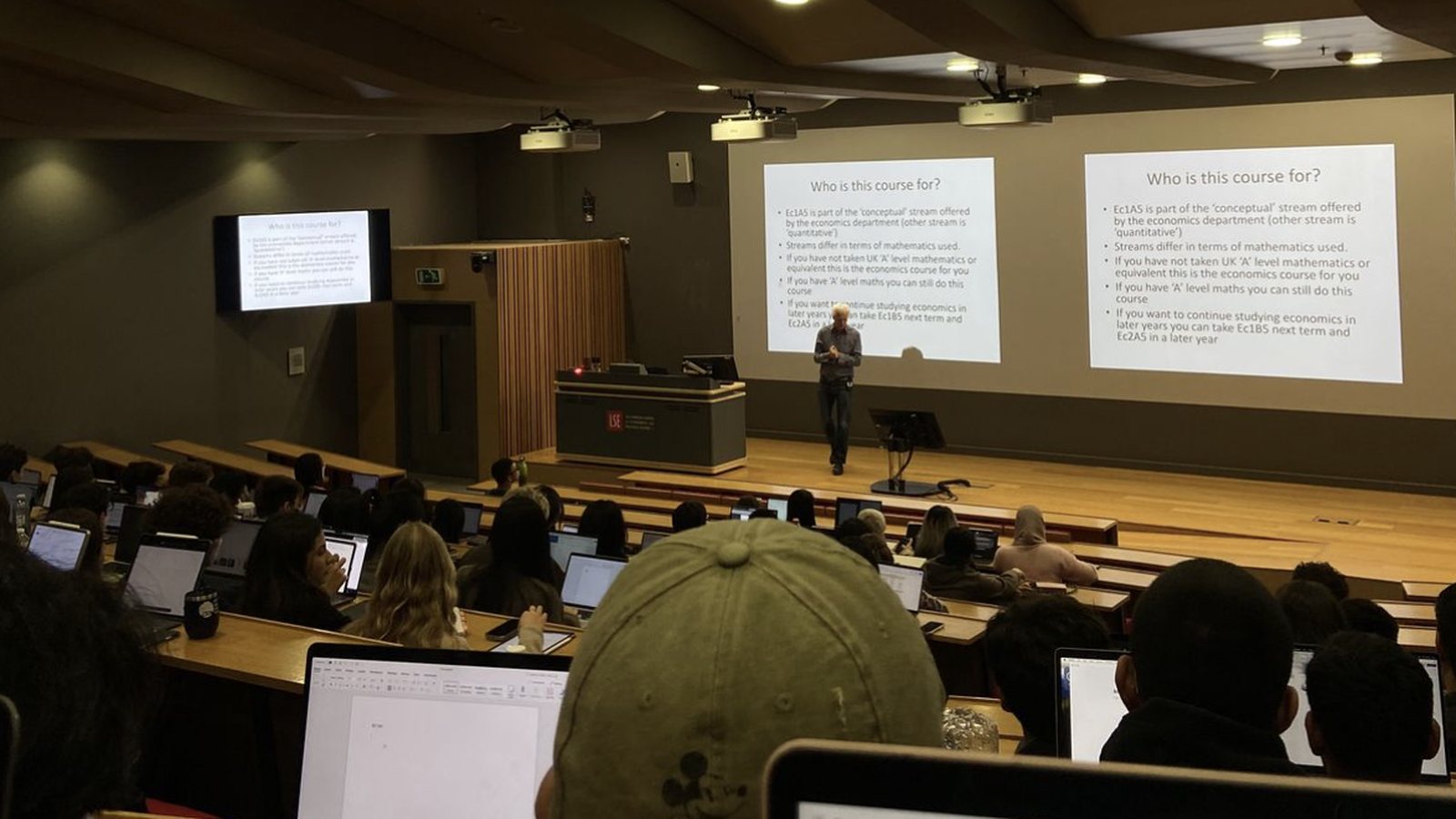

The transition from high school to university comes with plenty of questions: When should you start looking for internships? How does co-op actually work? What can you do in Grade 10 to prepare for university? And what happens when your university experience doesn't unfold exactly as you planned?
During our November 1, 2026 Initiate Insider: University Panels, we welcomed Ella Yan, a first-year student at the University of Waterloo, and Alice Terrissol Wang, a first-year student at the University of British Columbia, to share their experiences navigating university academics, professional opportunities, and student life.
Both speakers offered different perspectives on the transition from high school to university. From Waterloo's structured co-op system to finding external opportunities at UBC, they discussed what students can expect when entering university and how to make the most of their undergraduate experience.
Here are 7 key takeaways from the conversation.
1. Understand How Co-op Works Before Choosing a University
One of the biggest differences between university programs is the structure of their co-operative education opportunities.
Ella explained that Waterloo's co-op program alternates between academic study terms and work placements. Students typically spend one term studying before transitioning into a work term, allowing them to gain professional experience throughout their undergraduate degree.
For example, students might spend four months learning concepts in the classroom before spending another four months working at a company. When they return to university, they can bring their workplace experiences back into their studies and apply what they have learned academically to their professional responsibilities.
Although Ella had not yet begun her own co-op job search as a first-year student, she was looking forward to exploring the opportunities available through Waterloo's system.
Alice described a somewhat different experience at UBC. Rather than relying exclusively on opportunities provided through the university, she encouraged students to explore external companies and job postings independently.
She explained that many internship and co-op postings specify that applicants should be in their third or fourth year. However, younger students shouldn't automatically rule themselves out. With sufficient preparation and networking, first- and second-year students can still consider applying.
She also noted that placements can vary considerably in length, ranging from approximately three months to eight months or even a year.
Beyond gaining professional experience, Alice highlighted the financial benefits of internships and co-op placements. Many positions are paid, allowing students to earn money while developing practical skills and building their resumes.
Takeaway: Research the co-op structure of your intended university programs before applying. Some universities provide more structured placement systems, while others require students to take greater initiative in finding opportunities independently. Either way, don't wait until your third year to start exploring professional experience.
2. Start Preparing for University in Grade 10, Not Grade 12
When asked what advice they would give younger students hoping to get ahead before university, both panelists emphasized the importance of starting early.
Alice particularly highlighted Advanced Placement (AP) examinations, explaining that she hadn't learned about their potential university credit benefits until Grade 12.
Depending on the examination and university, qualifying AP scores may allow students to receive transfer credit for introductory university courses. This can potentially save students time and money while creating more flexibility in their undergraduate schedules.
She encouraged students to research which examinations their intended universities recognize and what scores are required to receive credit.
However, preparing for university involves more than academics.
Alice also emphasized maintaining strong grades, volunteering, joining clubs, building friendships, and developing effective time-management skills.
Ella agreed, adding that Grade 10 is an especially valuable time to begin exploring extracurricular activities.
Starting early gives students the opportunity to develop longer-term commitments and gradually take on more responsibility. Someone who initially joins a club as a general member might eventually become an executive or take on a leadership position as older students graduate.
This progression can also help students discover their interests and develop skills over several years rather than trying to accumulate activities shortly before applying to university.
However, Ella also reflected on something she wished she had done differently: making more time to enjoy Grade 10.
She explained that she had spent considerable time worrying about academics and future university applications, which sometimes meant missing out on opportunities to spend time with friends.
By Grade 12, she realized that high school friendships and experiences were also worth prioritizing, particularly as graduation approached and classmates began preparing to go their separate ways.
Takeaway: Grade 10 is an excellent time to begin exploring extracurriculars, developing academic habits, and researching university opportunities. However, don't become so focused on preparing for university that you forget to enjoy the years leading up to it.
3. Look for Opportunities to Apply What You Learn Outside the Classroom
University courses often introduce students to new concepts and theories, but understanding how those ideas apply outside the classroom can make the learning experience much more meaningful.
When asked about opportunities to apply their academic knowledge to real-world situations, both panelists discussed how these connections can emerge through different experiences.
Alice shared that she had been completing an internship with a small business, where she encountered responsibilities involving e-commerce, marketing, and promotions.
Although these tasks were relatively introductory, she recognized that she had already developed some of the necessary foundational knowledge during high school.
She also described her economics coursework at UBC as particularly interesting because she began recognizing economic concepts from her lectures in everyday situations.
Seeing those principles play out in real life made the material feel much more tangible.
Ella discussed applying concepts from her university courses to extracurricular competitions.
For example, she was able to connect knowledge from her computer science coursework to a hackathon and apply concepts from her finance course to case competitions.
These experiences demonstrated how academic learning can extend beyond assignments and examinations.
Students don't necessarily need to wait until they secure a formal internship to begin applying their knowledge. Competitions, independent projects, hackathons, and extracurricular activities can all provide opportunities to experiment with concepts learned in class.
Takeaway: Look for opportunities to put your academic knowledge into practice. Whether through internships, hackathons, case competitions, or independent projects, applying what you learn can help you better understand your interests and develop practical skills.
4. Finding Your Community Can Make University Feel Like Home
When asked about their favourite aspects of university, both speakers immediately highlighted the people they had met.
For many students, transitioning to university means entering an unfamiliar environment, sometimes in a completely different city or province. Building friendships and finding a sense of community can therefore become an important part of adjusting to university life.
Alice shared her experience as a commuter student at UBC.
She introduced the concept of Collegia, shared spaces where commuter students can spend time together, study, and participate in activities. These spaces provide an environment similar to some aspects of residence life, allowing students who commute to campus to develop connections outside their lectures.
She also recommended attending campus events, particularly orientation activities and Clubs Day.
These events provide opportunities to meet people with similar interests, discover student organizations, and become involved in different communities.
Alice also encouraged students to make an effort to talk to the people sitting around them in class. Even seemingly small interactions, such as introducing yourself or exchanging social media accounts, can make the transition less intimidating.
Ella shared a similar perspective at Waterloo.
Initially, she had been nervous about moving to a new province and adjusting to an unfamiliar environment. However, she found that university made it easier to connect with people who shared her academic interests and motivations.
She particularly appreciated the close-knit nature of her program, which had a cohort of approximately 50 students. She described the experience as somewhat reminiscent of high school, except that everyone around her shared similar interests and wanted to develop comparable skills.
Living in residence also gave her opportunities to meet people through campus events and everyday interactions.
Her advice was to simply show up. If you attend events and make an effort to connect with others, you will find people who are equally interested in making new friendships.
Takeaway: Don't assume friendships will develop automatically once you arrive at university. Attend orientation programs, explore clubs, spend time on campus, and introduce yourself to people in your classes. Sometimes, the smallest interactions can lead to lasting friendships.
5. Your Admission Average Doesn't Tell the Entire Story
One of the most anticipated parts of the discussion was hearing about the panelists' own academic experiences during high school.
Alice shared that she had maintained a detailed record of her courses, electives, and academic plans beginning in Grade 9.
In Grade 11, she had taken courses including English, French, Mandarin, biology, chemistry, social studies, marketing and promotions, pre-calculus, and choir. Her overall average was approximately 93%, although her individual grades varied considerably, ranging from 76% in biology to 98% in her highest-performing course.
In Grade 12, her average was approximately 95–97%, with grades ranging from 83% in chemistry to 100% in another course.
Ella, meanwhile, shared that her combined Grade 11 and Grade 12 average when applying to universities and scholarships was approximately 98%. She had also taken several AP courses.
Despite their strong academic records, both speakers emphasized that students shouldn't become overly concerned about having a few lower grades.
Ella explained that many universities consider a student's top six courses, although admission requirements and evaluation methods differ between institutions and programs.
She also pointed out that universities may consider whether students have taken courses relevant to their intended fields of study.
Alice added that admission outcomes can sometimes seem unpredictable. She had heard of students receiving offers with averages in the high 80s while others with considerably higher averages were unsuccessful.
Both speakers acknowledged that competitive university admissions can sometimes feel frustrating, particularly when students compare their results with others online.
However, they emphasized that admission decisions involve more than simply comparing percentages, and that students should avoid assuming that another applicant's experience will determine their own chances.
Takeaway: Research the admission requirements of your intended programs rather than relying exclusively on online admission statistics. Maintain strong academic performance, but remember that one lower course mark does not automatically define your university prospects.
6. There Are Multiple Paths to Reaching Your University Goals
Building on their discussion about admission averages, both panelists shared an important reminder: not receiving an offer from your preferred program doesn't mean your academic or career goals are out of reach.
Ella described knowing students who had achieved exceptionally high averages and developed impressive extracurricular profiles but were still unsuccessful in gaining admission to their intended programs.
She explained that some of these students eventually pursued alternative pathways, either by beginning in another program and attempting to transfer or by exploring different universities.
Alice echoed this perspective, explaining that university admissions can sometimes feel like a matter of chance.
She also emphasized that students should remember how much can change after high school. Many university students eventually reconsider their academic interests, switch programs, or discover entirely different career paths.
For students who don't receive their preferred offers, there are several possibilities worth exploring, including:
- Alternative programs: Consider beginning in another program that provides relevant foundational coursework.
- Internal transfers: Research whether your university allows students to transfer into their preferred program after completing certain academic requirements.
- Other institutions: Explore universities and colleges that offer different pathways toward similar career goals.
- Reapplying: Consider applying again in a future admission cycle if your preferred program remains your goal.
Ella also pointed out that students can become so focused on a particular university or program during high school that they forget how many other possibilities exist.
Your interests may change, your priorities may evolve, and the career you eventually pursue may look very different from what you originally imagined.
Alice offered a similar reminder that there is much more to life than university admissions. Although an unsuccessful application can feel overwhelming in the moment, it doesn't eliminate the many opportunities available to students afterward.
Takeaway: Apply ambitiously, but remain open to alternative pathways. A university acceptance is one milestone, not a final determination of what you can accomplish.
7. University Is About More Than Academics
Throughout the conversation, both speakers returned to the importance of balancing academic responsibilities with personal experiences.
Alice and Ella discussed how university can introduce a different level of academic independence, requiring students to manage their coursework, extracurricular commitments, and personal responsibilities.
Although their experiences differed, both emphasized finding routines that allow students to stay productive without neglecting other aspects of their lives.
Their discussion also highlighted how university offers opportunities to explore interests beyond a chosen major.
From participating in hackathons and case competitions to joining clubs, meeting new people, and pursuing internships, students have opportunities to develop skills and discover interests that may not necessarily appear in their course requirements.
Alice's advice to younger students was particularly memorable: make the most of your time in high school because you only experience each grade once.
Ella similarly reflected on wishing she had spent more time enjoying her earlier high school years instead of constantly worrying about what came next.
Their experiences serve as a reminder that preparation is important, but it shouldn't come at the expense of the experiences happening along the way.
Takeaway: University is not simply an extension of high school with more difficult courses. It is an opportunity to explore new interests, develop independence, build relationships, and discover what you want your future to look like.
A Final Word From Our Panelists
One of the biggest themes throughout the conversation was that preparing for university requires more than maintaining strong grades or building an impressive extracurricular profile.
Ella's experience highlighted the opportunities that come with a structured co-op program, a close-knit academic cohort, and applying classroom knowledge through competitions.
Alice offered a different perspective on finding internships independently, navigating university as a commuter student, and recognizing the importance of exploring opportunities beyond what is immediately available through your institution.
Both speakers also emphasized the importance of starting early, developing meaningful extracurricular commitments, and making time for friendships and experiences outside academics.
Perhaps most importantly, their advice challenged the idea that students need to have every part of their future figured out before graduating high school.
There are different ways to approach university, different opportunities to explore, and different paths toward reaching your goals.
Thank you to Ella Yan and Alice Terrissol Wang for joining our November 1 Initiate Insider panel and sharing their experiences with our community!